





Table of Contents
ToggleSmart home tech vs. traditional home systems, it’s a question homeowners face more often than ever. The market for connected devices has exploded, with everything from voice-controlled thermostats to app-managed security cameras now available at most hardware stores. But does that mean everyone should rush to upgrade? Not necessarily. Traditional systems still hold their ground in many situations, offering simplicity and reliability that some households prefer. This guide breaks down the key differences between smart home tech and conventional setups. It covers the benefits, the drawbacks, and the scenarios where one option clearly beats the other. By the end, readers will have a clear picture of which approach fits their lifestyle, budget, and long-term goals.
Key Takeaways
- Smart home tech offers convenience, energy savings, and enhanced security through remote control and automation.
- Traditional home systems provide simplicity, reliability, and lower upfront costs without internet dependency.
- Smart thermostats can reduce heating costs by 10-12% and cooling costs by about 15% annually.
- Privacy and cybersecurity risks are real concerns with smart home tech, as devices collect data and may be vulnerable to hacking.
- The smart home tech vs. traditional systems choice depends on your budget, internet reliability, and comfort level with technology.
- Homes with smart features installed are more attractive to buyers, with 81% preferring properties with connected devices.
What Is Smart Home Technology?
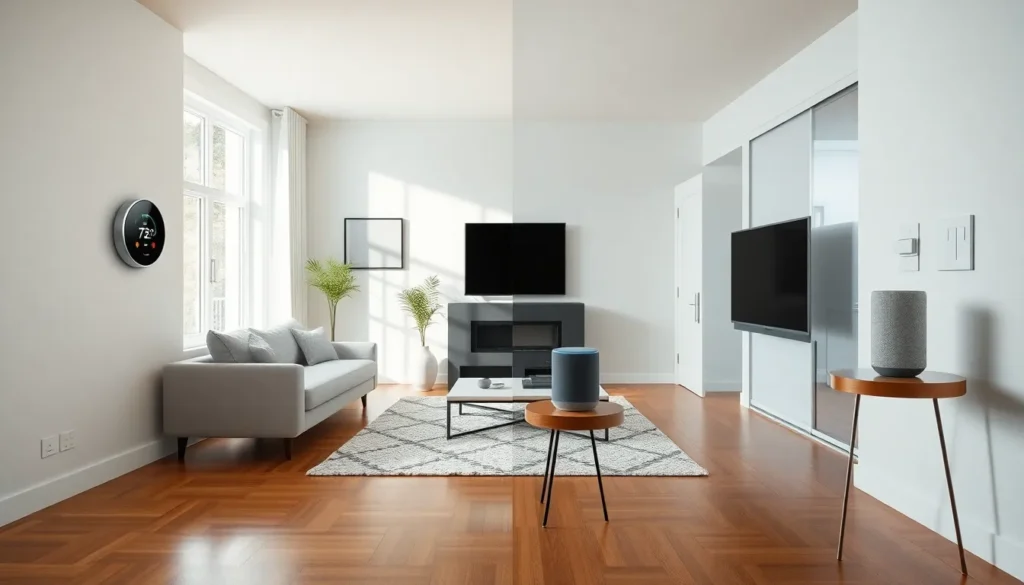
Smart home tech refers to devices and systems that connect to the internet and can be controlled remotely. These products communicate through Wi-Fi, Bluetooth, Zigbee, or Z-Wave protocols. They allow homeowners to manage lighting, heating, security, and appliances from a smartphone, tablet, or voice assistant.
Common examples of smart home tech include:
- Smart thermostats like Nest or Ecobee that learn heating and cooling preferences
- Smart locks that allow keyless entry and remote access control
- Smart lighting systems such as Philips Hue that adjust brightness and color via app
- Smart security cameras and doorbells like Ring or Arlo
- Smart speakers (Amazon Echo, Google Home) that serve as central control hubs
Traditional home systems, by contrast, operate independently. A standard thermostat adjusts temperature manually. A conventional deadbolt requires a physical key. These systems work without internet connectivity and don’t require apps or accounts to function.
The core difference between smart home tech vs. traditional setups comes down to connectivity and automation. Smart devices talk to each other and to the cloud. Traditional systems perform single functions without external communication. Neither approach is inherently better, they simply serve different needs and comfort levels with technology.
Benefits of Smart Home Tech
Smart home tech offers several practical advantages that appeal to modern homeowners. Understanding these benefits helps clarify why so many people are making the switch.
Convenience and Control
The biggest draw of smart home tech is convenience. Homeowners can adjust the thermostat while stuck in traffic. They can check if they locked the front door from the office. They can turn off forgotten lights without getting out of bed. This level of control saves time and reduces daily friction.
Voice assistants add another layer of ease. A simple command like “turn off the kitchen lights” eliminates the need to walk across the house or find a switch in the dark.
Energy Efficiency
Smart home tech can lower utility bills. Smart thermostats learn household patterns and adjust heating and cooling automatically. They reduce energy waste by not conditioning empty rooms. The U.S. Department of Energy estimates smart thermostats can save homeowners 10-12% on heating and about 15% on cooling annually.
Smart lighting systems also contribute. Motion sensors turn lights off in unoccupied rooms. Scheduling features prevent lights from running all night.
Enhanced Security
Smart home tech transforms home security. Video doorbells let homeowners see visitors from anywhere. Smart locks send alerts when doors unlock. Motion-activated cameras record footage and store it in the cloud.
These features provide peace of mind, especially for frequent travelers or families with children who arrive home before parents.
Increased Home Value
Many buyers now expect smart features. A 2023 survey by Coldwell Banker found that 81% of home buyers prefer properties with smart home tech already installed. Upgrading to connected devices can make a home more attractive on the market.
Drawbacks to Consider
Smart home tech isn’t perfect. Several drawbacks deserve honest consideration before making a purchase.
Upfront Costs
Smart devices cost more than their traditional counterparts. A basic thermostat runs $25-50. A smart thermostat costs $150-300. Multiply this across lighting, locks, cameras, and speakers, and the total investment climbs quickly. Budget-conscious homeowners may find smart home tech hard to justify.
Privacy and Security Risks
Connected devices collect data. Smart speakers listen for wake words. Cameras record footage. Thermostats track when people are home. This information travels to company servers, raising privacy concerns.
Cybersecurity presents another issue. Hackers have targeted smart home tech through weak passwords and unpatched firmware. A compromised device could expose personal information or even grant physical access to a home.
Reliability Issues
Smart home tech depends on internet connectivity. When Wi-Fi goes down, many devices lose functionality. Power outages can disable entire systems. Traditional systems, by comparison, continue working without network access.
Software updates can also cause problems. A manufacturer might discontinue support for older devices, forcing homeowners to replace hardware that still works mechanically.
Learning Curve
Setting up smart home tech takes time and patience. Connecting devices, downloading apps, creating accounts, and configuring automations can frustrate users who aren’t tech-savvy. Traditional systems work out of the box with minimal setup.
When Traditional Systems Make More Sense
Smart home tech suits many households, but traditional systems remain the better choice in certain situations.
Limited internet access: Rural areas with spotty Wi-Fi connectivity struggle to support smart devices. Traditional systems function reliably without network dependence.
Tight budgets: Homeowners focused on minimizing expenses benefit from affordable traditional options. A standard light switch costs a few dollars and lasts for decades.
Rental properties: Tenants often can’t install permanent smart home tech. Traditional systems avoid conflicts with landlords and lease agreements.
Simplicity preferences: Some people don’t want to manage apps, updates, and accounts. They prefer flipping a switch and knowing it will work every time. Traditional systems deliver that straightforward experience.
Privacy concerns: Homeowners uncomfortable with data collection can avoid smart home tech entirely. Traditional systems don’t record, track, or transmit information.
The smart home tech vs. traditional debate often comes down to personal priorities. Those who value automation, remote access, and energy savings lean toward smart devices. Those who prioritize simplicity, privacy, and lower costs often stick with conventional options.